Solutions
We automate the manual workflows your team shouldn't still be doing — hiring, payroll, frontline communication, sales enablement.
The problem: Your consultants start every morning buried in resumes instead of talking to candidates. With the rise of polished, template-driven applications, quick visual scanning is no longer reliable — strong candidates get buried while surface-level ones float to the top.
We deploy an automated screening and ranking system that reads every incoming resume, scores candidates against your role-specific criteria, and surfaces a ranked shortlist each morning. The system handles formatting inconsistencies, parses real experience from filler, and flags candidates whose backgrounds genuinely match — regardless of how well the resume is written. Your consultants start the day with a shortlist, not a stack.
Deployed in approximately one month. Most of that time is iterative alignment — understanding how your team evaluates candidates, which criteria matter for different role types, and calibrating the ranking to match your judgment. When you flag a misranked candidate, we adjust and redeploy within hours.
Recruitment consultancies and in-house hiring teams in Singapore processing high volumes of applications across multiple roles.
The problem: Your operations staff handle both tenancy management and finance workflows. Operational urgencies during the month push finance tasks to the back of the queue, leaving invoicing and reconciliation backlogged at month-end. Manual data entry across spreadsheets creates errors that compound downstream.
We deliver two connected automation solutions. The first structures your operations workflow — tenant records, unit status tracking, lease timelines, and task scheduling — into a single managed system. The second automates the finance workflow — invoice generation from operational data, payment matching, and reconciliation reporting. Because both solutions share the same data, an updated lease automatically flows into the correct invoice schedule.
Delivered within approximately one month. The iterative process surfaces edge cases — partial-month billing, multi-unit accounts, variable schedules — through back-and-forth testing. When you identify a scenario we have not accounted for, the fix is typically delivered within a day.
Property services companies, facilities management firms, and operations-heavy SMEs in Singapore where the same staff juggle both operational and financial workflows.
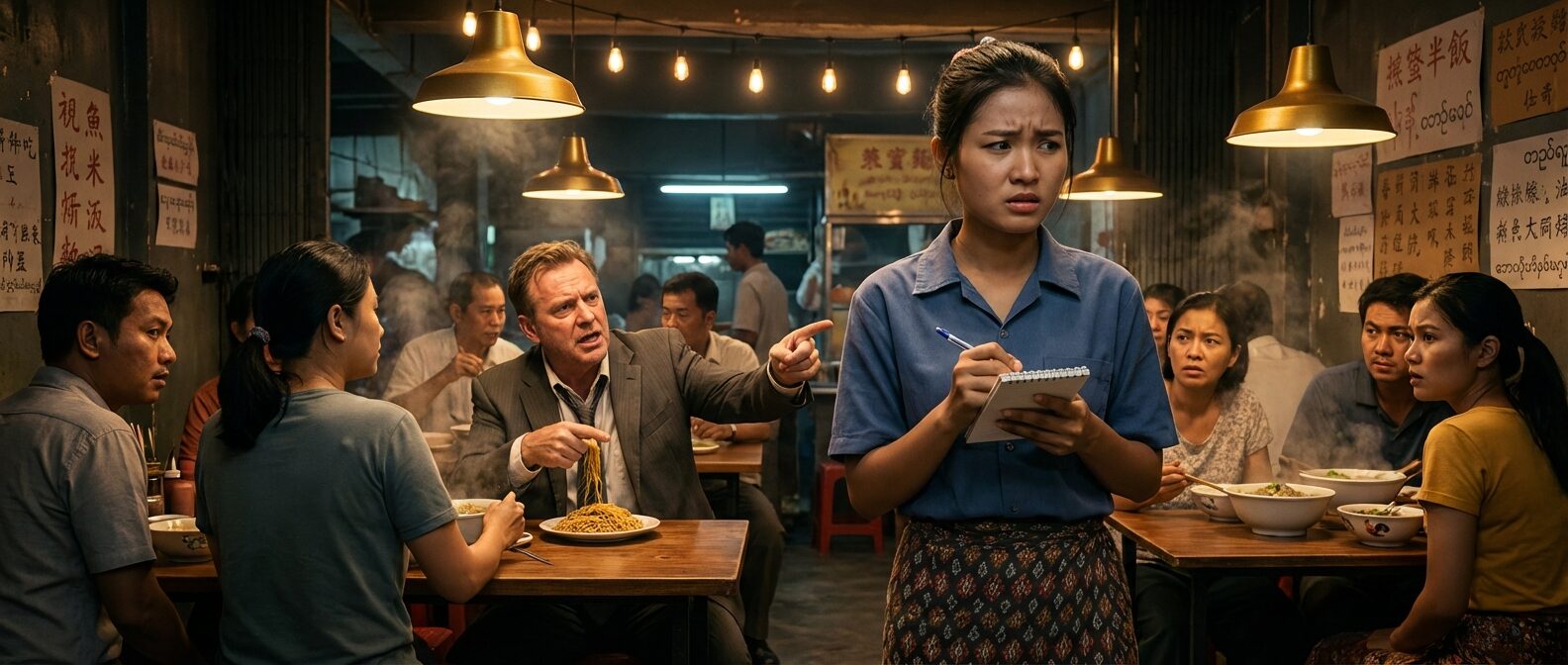
The problem: Your service staff learn dish names and basic flows quickly. The persistent problem is nuanced customer requests — "less oil", "crispier", "no chili" — the modifiers where dining preferences actually live. These get lost in translation, causing wrong orders, food waste, and frustration for staff who know they misunderstood but cannot pinpoint what was said.
We deploy AR smart glasses that provide real-time subtitles during customer interactions — including the specific modifiers — displayed in the staff member's field of view. The interaction stays natural; no need to ask customers to repeat themselves. Separately, we build a web-based training app that staff use during breaks to practise real customer phrases with spaced repetition. Over time, staff internalise the language and rely on the glasses less. Our hardware team handles procurement and supply chain to keep costs manageable.
Deployed in approximately one month. The iterative process is especially important here because modifier vocabulary is domain-specific — "dry" means something different for noodles than for vegetables. We work closely with your kitchen and floor managers to build an accurate phrase library, updating translations same-day when staff flag anything unnatural.
F&B operators in Singapore with multilingual frontline staff — especially restaurants where nuanced customer requests directly affect service quality.
The problem: In customer-facing businesses, the quality of the conversation determines whether a sale closes. New staff know your products but lack the instinct for when to recommend, how to handle objections, and how to close naturally. Experienced staff perform well but have no scalable way to transfer what they know. Traditional training — shadowing, role-play, manuals — helps, but there is always a gap between training and live performance.
We deploy a real-time coaching system that transcribes live customer conversations and provides staff with contextual prompts — suggested responses, product recommendations, and objection-handling cues — in real time. The coaching is subtle and non-intrusive. For new hires, we also build a practice partner: a conversational training tool that simulates realistic customer interactions and adapts to each person's weak spots, so they can rehearse before going on the floor.
Each deployment takes approximately one month. The majority of time is spent understanding your sales process, common customer objections, and what "good" looks like in your specific context. A creative studio has very different dynamics from a hair salon, so the coaching logic is tailored for each business.
Customer-facing sales teams in Singapore — creative studios, consultancies, salons, and service businesses where the conversation is the product.
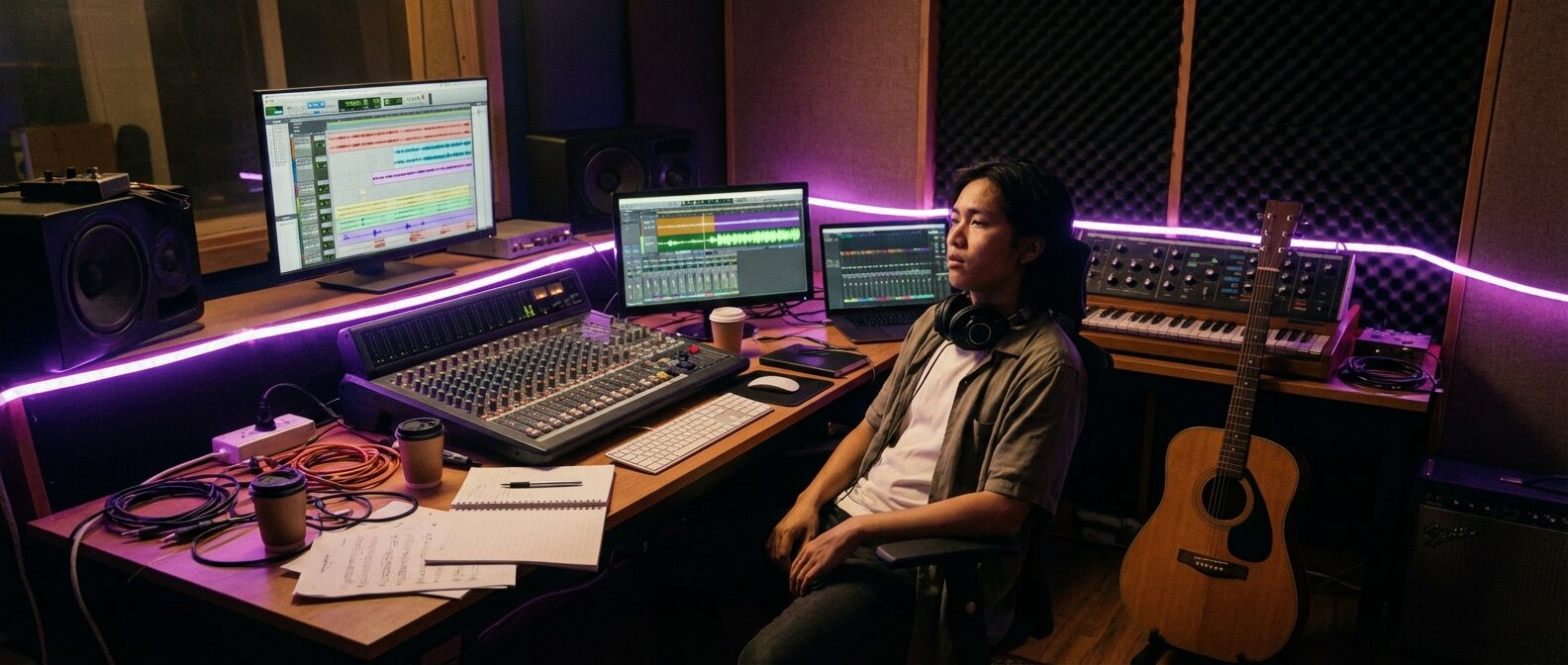
The problem: Your creative ideas come together fast — melodies and song structures take shape quickly. But the arrangement and instrumentation phase is a bottleneck. Layering instruments, creating production-ready arrangements, and iterating on sonic direction takes weeks per track. For an artist building momentum, that delay means fewer releases, slower audience growth, and lost creative energy.
We deploy tools that accelerate the arrangement and instrumentation workflow. The system takes your core musical ideas — melody, chord progression, song structure — and generates arrangement drafts with instrumentation options. You review, select, and refine from these drafts rather than building every layer from scratch. Creative decisions stay entirely with you; the repetitive production work moves dramatically faster. The output integrates with standard music production software.
Delivered in approximately one month. The iterative process is essential because musical taste is subjective and personal. Through fast back-and-forth, we refine the system's understanding of your sonic preferences until the drafts consistently land close to your intended direction.
Independent musicians and emerging artists in Singapore whose creative output outpaces their production capacity.